When your body stops feeling like yours
Let's be real: pleasure requires presence. You can't actually feel good if you're not in your body. Dissociation, chronic stress, depression, and trauma all do the same thing. They put distance between you and your own nervous system. You exist behind glass.
The clinical term is "depersonalization," but that's too clean for what it actually feels like. It's the sensation of watching yourself from three feet away. Your hand moves but you don't feel it. Someone touches you and the signal doesn't arrive. Orgasm becomes hypothetical.
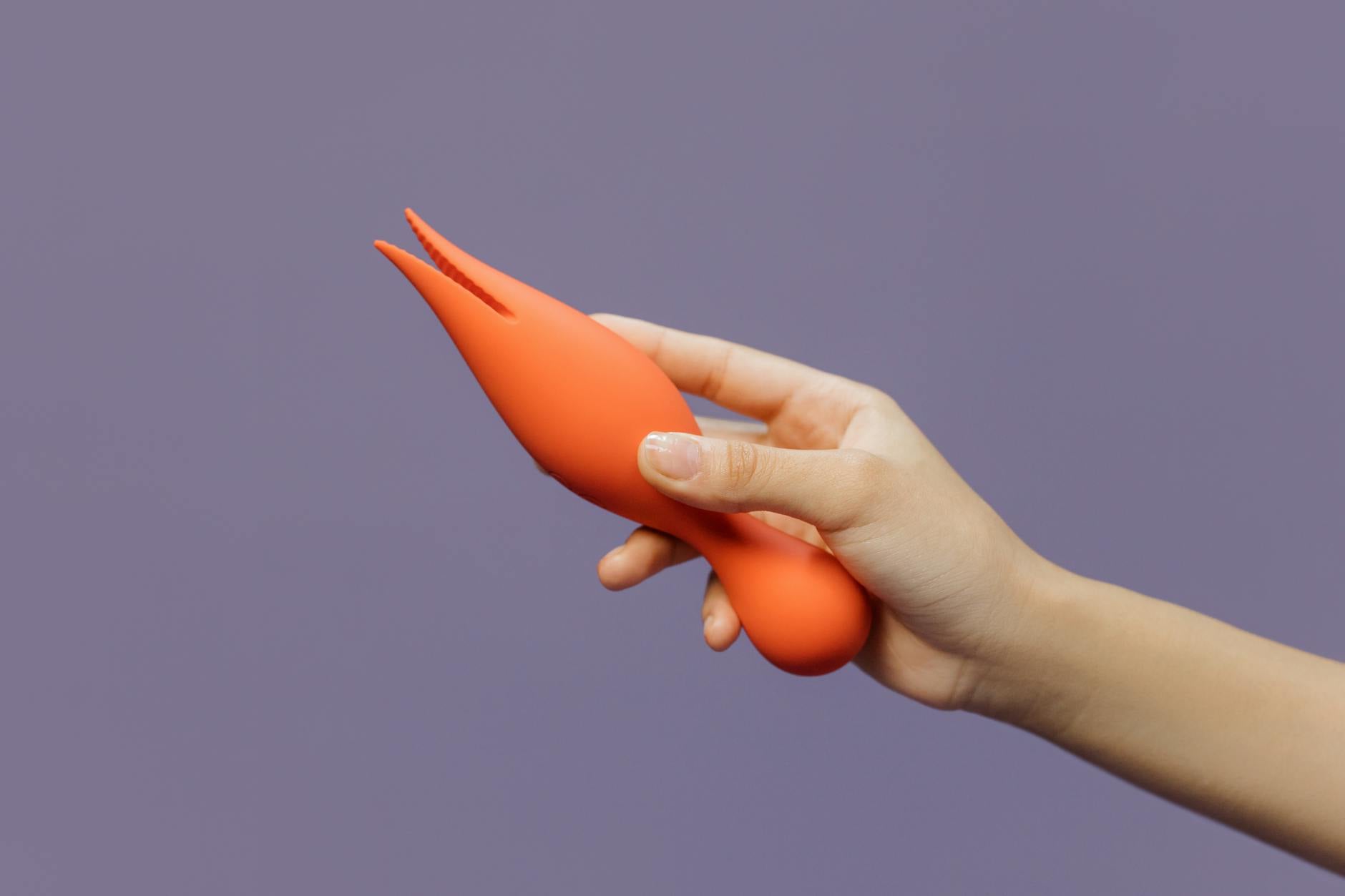
Lemon vibrators, specifically the suction-based design of the Lem, can help you undo that distance. Not because vibration is magic. But because reconnection is a skill, and the right tool makes the practice easier.
Why dissociation kills sensation
Your nervous system has two modes: safe and unsafe. When you're chronically stressed, grieving, or recovering from trauma, your brain decides your body is the threat. It downregulates sensation as a protective measure. You literally feel less. Not emotionally. Literally.
This happens through your vagus nerve, which runs from your brain through your chest and gut. When threat is detected, the vagus nerve dampens signals from your skin, your genitals, your sensory organs. Your brain essentially turns down the volume on incoming sensation so you don't have to feel the pain.
It's the right response in an emergency. But when it stays on for months or years, it becomes its own prison.
The reconnection problem with traditional toys
Here's the issue: traditional vibrators are loud, intense, and overwhelming for someone who's dissociated. They demand presence. Your nervous system registers them as another stressor, not a gateway back in.
The pressure feels like pressure. The vibration feels like vibration. It's external stimulus applied to a body that's already tuned out. You lie there waiting for something to happen, and nothing does, because the connection never arrived.
That's where lemon sucker vibrators change the conversation.
Why suction works differently for disconnection
A lem vibrator, or lemon clitoral vibrator, uses gentle pulsing suction instead of direct vibration. This matters neurologically. Suction activates your skin's pressure receptors, not just your vibration receptors. It's a gentler signal. Less "external demand" and more "invitation."
The suction pulls your tissue slightly, stimulating nerve endings in a way that mimics the sensation of mouth. This isn't new. It's actually the pattern your nervous system recognizes as safe stimulation. Your body knows this sensation from partnered sex, from kissing, from touch that came with care.
For someone disconnected, this familiarity is critical. Your nervous system needs a signal it recognizes as safe before it will turn the volume back up.
Rebuilding sensation: the protocol
Three things make lemon vibrators effective for reconnection work:
1. Consistency matters more than intensity. Start on the lowest setting. You're not chasing an orgasm. You're teaching your nervous system that this sensation is safe and worth noticing. Three to five minutes at the lowest setting, several nights a week. No goal. Just presence.
2. Ground yourself first. Before you use a lem vibrator, sit with your feet on the floor. Notice five things you can see, four you can feel, three you can hear, two you can smell, one you can taste. This is the 5-4-3-2-1 grounding technique. It brings you into your nervous system before stimulation begins.
3. Pair it with breath awareness. As the lemon sucker touches you, breathe slowly. Inhale for four, hold for two, exhale for six. Long exhales activate your parasympathetic nervous system, the part that handles pleasure and rest. Without this, you're just adding stimulation to a disconnected system.
What reconnection actually feels like
Honestly, it's not dramatic. The first week, you might notice nothing. That's fine. You're rewiring. By week three, you might notice a slight tingle. By week six, sensation starts arriving with less delay. You feel the touch register in real time, instead of three seconds later.
Orgasm, if it comes, comes later. Don't rush it. Many people with dissociation never pursue orgasm until their basic sensation is back. That's the right instinct.
The real prize is smaller: noticing your hand on your skin and feeling it immediately. Touching your partner and experiencing the touch at the same moment they give it, not five seconds after. Being present during sex instead of watching yourself.
Working with a partner during reconnection
If you're in a relationship, your partner needs to know you're doing this work. Not as pressure, but as context. Explain that sensation rebuilding is slow. Explain that slow is the goal.
Many partners read disconnection as rejection. "She doesn't want me." The truth is usually: "I don't feel anything right now, including you." Those are different problems with different solutions. One requires reconnection work. The other requires intimacy repair.
Sometimes both are true. Be honest about which one you're dealing with. A good partner understands the difference between "I need space to rebuild my nervous system" and "I'm not interested in you."
When dissociation is trauma-related
If your disconnection came from sexual trauma, abuse, or assault, a vibrator alone won't fix it. You need a trauma-informed therapist, ideally one trained in somatic therapy or EMDR. That's not optional. That's foundational.
What lemon vibrators can do is support that work, once you're already in therapy. They give you a low-pressure way to practice inhabiting your body between sessions. They're a tool for a larger process, not a replacement for that process.
The timeline for reconnection
Don't expect miracles in two weeks. Nervous system rewiring takes time. Figure on two to three months of consistent, gentle practice before you feel a real shift. Some people need longer. That's normal.
If you're on antidepressants or antianxiety medication, your timeline might be slower. These meds dampen sensation as a side effect. That's not a reason to stop them. It's just information. Your reconnection will take longer, and that's fine.
Your body is not broken. It's protecting you. Reconnection is simply teaching it that protection can lower its guard.
The role of patience and shame
Here's what I see over and over: people disconnect and then feel shame about disconnection. "I should feel pleasure. Why don't I? What's wrong with me?" The shame becomes another reason to stay disconnected.
Stop. Disconnection is a logical response to threat. Your system is working exactly as designed. The goal isn't to shame yourself into feeling. It's to show your nervous system that sensation is safe again, slowly and gently.
A lem vibrator gives you a concrete, manageable way to do that. It's specific. It's low-pressure. It fits into your regular life. It doesn't require a partner or conversation or taking off clothes you're not ready to shed.
It's just you, and a tool, and the slow, quiet work of coming home to your own body.
FAQ: Body Disconnection and Lemon Vibrators
How do I know if I'm dissociated or just not in the mood?
Mood is situational. You're not in the mood because something is off: stress, timing, your partner. Dissociation is chronic. You feel absent from your body in general, not just during sex. You don't feel your hands on the steering wheel. You don't notice temperature. You watch yourself talk. If this sounds like you, disconnection is probably the issue, not mood.
Can a lem vibrator alone fix dissociation?
No. If your disconnection is trauma-related, you need therapy. If it's stress-related, you need stress reduction alongside the vibrator. If it's medication-related, you might need a medication adjustment. The vibrator is one piece of a larger puzzle. It works best when paired with other reconnection practices.
How long should I use a lemon clitoral vibrator for reconnection?
Start with three to five minutes at the lowest setting. If that feels overwhelming, use two minutes. If it feels fine, you can go up to ten minutes, but don't rush intensity. The goal is consistency, not duration. Three times a week beats once a week for thirty minutes.
What if I don't feel anything even after weeks of practice?
Your nervous system might need more time, or you might need professional support. Talk to a trauma-informed therapist before increasing intensity. Also check: Are you grounding first? Are you using the lowest setting? Are you being patient with yourself? Rushing this process backfires.
Can I use lemon vibrators alongside therapy or medication?
Absolutely. Reconnection work is complementary to both. A good therapist will support you using tools that help your nervous system feel safer. Just mention it. There's no shame in integrating vibration into your healing.
Is reconnection the same as rebuilding arousal?
No. Reconnection is feeling your body again. Arousal is your body responding to desire or stimulus. You can be reconnected and still low-libido. You can be aroused and still dissociated (though it's rare). Rebuild sensation first. Arousal follows, sometimes months later.
Sources and references
Polyvagal Theory and dissociation: Porges, S. W. (2011). The Polyvagal Theory. W.W. Norton.
Somatic therapy for trauma: van der Kolk, B. (2014). The Body Keeps the Score. Viking.
Nervous system regulation and grounding: Mate, G. (2003). When the Body Says No. Wiley.
Sensate focus and reconnection: Masters & Johnson techniques adapted for dissociation recovery.
For deeper work on trauma and pleasure, talk to a certified sex therapist or trauma-informed counselor. Your nervous system's wisdom is worth protecting. Reconnection is worth the time.