
Let's start with the fear
You want to bring a lemon clitoral vibrator into your sex life with your partner, and you're stuck in the part where you haven't said anything yet. The voice in your head is probably running through worst-case scenarios: "They'll think I'm not satisfied." "They'll feel replaced." "This will wreck the mood entirely."
Here's what I've seen after years of working with couples: almost none of those catastrophes actually happen. What does happen is that partners—especially in long-term relationships where real trust exists—often feel relieved. Relieved that someone finally named the thing everyone's been feeling but nobody's been saying.
Why you actually want to have this conversation
After years of sex with the same person, pleasure can become routine. Not bad, but predictable. A lemon vibrator isn't about fixing a broken relationship or replacing your partner's touch. It's about adding a dimension that neither of you alone can create.
Here's the part that research backs up: couples who introduce toys together report higher satisfaction, more communication, and less resentment down the line. Not because the toy itself is magic, but because having the conversation forces you both to acknowledge that pleasure matters and that asking for what you want is safe.
If you've been together five years, ten years, or longer, you've built something valuable. A conversation about pleasure isn't a threat to that. It's actually an investment in it.
The conversation strategy that works
Don't do this during sex. Don't do it when you're already in bed at night. Do it somewhere neutral, clothed, with time to actually talk—like after dinner or during a walk.
Start with honesty, not a pitch. Say something like: "I've been thinking about ways we could expand what we do together, and I want to talk about it with you because I trust you." That opening already changes the energy. You're not springing a demand. You're inviting collaboration.
Then say what you actually want. "I've been curious about trying a lemon clitoral vibrator. I think it could feel really good for me, and I want us to explore it together." Notice you said "with you" and "together." That matters.
What your partner might actually be thinking
If your partner seems hesitant, they're probably cycling through one of three thoughts:
1. Insecurity about their role. This is the big one. They might worry that if you need a vibrator, they're not enough. Here's your response: "I want this because I want to feel more pleasure with you, not instead of you. A lemon vibrator doesn't touch the emotional part. You do that." And mean it. Because it's true.
2. Embarrassment or discomfort. Some people grew up in environments where sex toys weren't discussed, period. They might need to sit with the idea for a few days. That's fine. Give them space.
3. Actual curiosity masked as caution. Plenty of partners are interested but worried they'll look foolish asking questions. Help them by being matter-of-fact. "A lemon clitoral vibrator uses suction instead of vibration—it feels really different. Want to look at some information together?"
The partners who flat-out reject the idea without any curiosity are rare, and they're usually dealing with deeper insecurity or control dynamics. If that's your situation, that's a conversation bigger than the toy.
How to actually use it together
You don't need a whole choreography. The simplest approach: your partner is touching you, you introduce the lemon vibrator during that. Or they hold it while you direct where it goes. Or you use it solo while they're inside you. There's no wrong way.
What matters is that the first time feels low-pressure. You're not performing. You're exploring. If it's awkward, that's normal. Sex with a new element is always slightly awkward the first time.
Many couples find that how you use lemon vibrators when you want deeper connection with your partner shifts over time. The first few times might be tentative. After that, it becomes part of your regular rotation, or you realize it's not for you. Both outcomes are fine.
The conversation after the conversation
Don't let this become a one-time thing you never mention again. A week or two later, bring it up casually: "So, how did you feel about that?" Or "Do you want to try it again?" These check-ins are how couples build deeper communication around pleasure.
If something didn't work—the timing felt off, the sensation wasn't what either of you expected, the vibe (no pun intended) was weird—name it. "That felt too intense for me" or "I liked it, but I want to try it differently next time." This is how you learn each other's bodies even better.
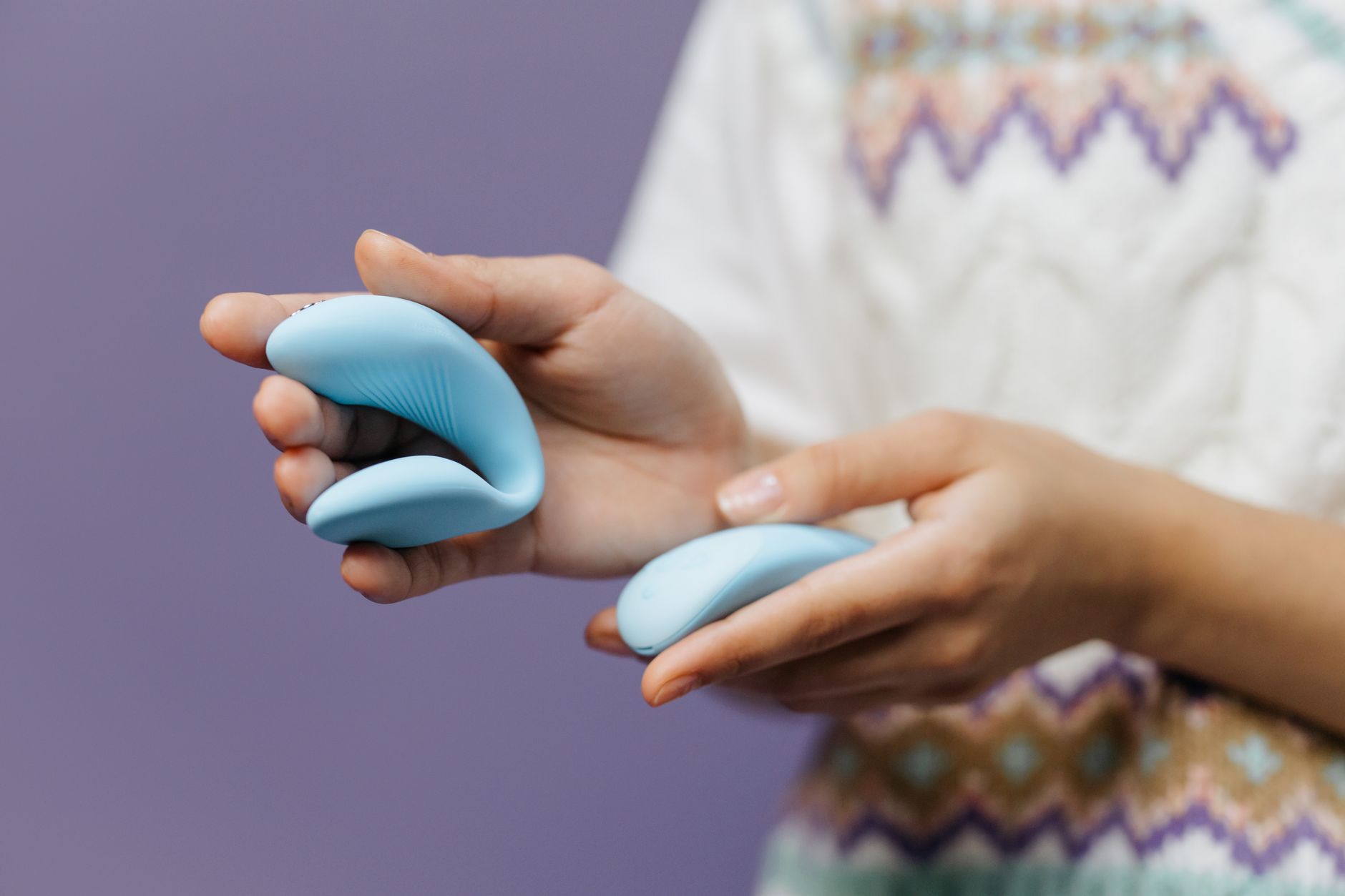
Photo by cottonbro studio on Pexels
What changes and what doesn't
Introducing a lemon sexual toy doesn't fundamentally alter your relationship. Your emotional intimacy is still built on trust, vulnerability, and time together. The toy is a tool, not a replacement for any of that.
What often does shift is permission. Once you've had one honest conversation about pleasure, you can have others. You might feel more comfortable asking for what you want in other areas. That's the actual benefit of this conversation—not the vibrator itself, but the communication it opens up.
Some couples use lemon adult toys regularly. Others try it once and move on. The point isn't to adopt a new sexual practice forever. It's to prove to each other that asking for pleasure is safe, and that experimenting together builds intimacy.
When to bring in outside help
If you've tried having the conversation and your partner completely shut it down, or if the rejection felt punitive or controlling, that's worth exploring with a couples therapist. Not because wanting to use a vibrator is unreasonable—it's not—but because how a partner responds to your sexual needs tells you something important about the relationship.
A good therapist can help you figure out if this is about the toy itself (usually it's not) or about deeper patterns around control, shame, or disconnection.
The real reason this works
Long-term relationships need novelty. Not because what you had before was bad, but because brains adapt. The same touch stops registering as intensely. The same position gets comfortable in a rut sort of way.
A lemon clitoral vibrator is one way to break that pattern. So is trying a new position, changing the time of day, going somewhere different. The tool matters less than the fact that you're both saying: "I still want this to feel good. I still want to explore with you."
That message—said out loud, in whatever words feel true to you—is what actually matters.
People also ask
How do I bring this up if we've never talked about sex directly?
Start smaller if you need to. You don't have to jump straight to "I want to use a lemon vibrator." You could say, "I've been thinking about ways to make sex feel better for me." Then listen to what they say. Sometimes the conversation unfolds over days or weeks, not all at once. That's fine.
What if my partner says they want to use a vibrator too?
Then you both get to explore together. This is actually ideal. Partners sometimes worry that wanting a toy means something's wrong, so when their partner is enthusiastic, it shifts the whole framing from "something's lacking" to "let's enhance what we have." If you're both curious, that makes the whole experience less fraught.
Does using a lemon vibrator mean my partner isn't satisfying me?
No. A lemon clitoral vibrator stimulates your body in a way no human touch can replicate—it's not because your partner is lacking, it's because they have hands and this device has suction. Different tools do different things. Using a vibrator doesn't mean your partner isn't good at sex. It means you want to experience your body in multiple ways, which is healthy.
How long should we wait after the conversation to actually try it?
There's no rule. Some couples want to try it the same night. Others feel more comfortable waiting a few days until the initial vulnerability of the conversation has settled. Go with what feels right. If you rush it because you're trying to prove a point, it'll feel forced. If you wait too long, the courage might fade.
What if my partner is interested but seems nervous when we actually try it?
That's normal. Nervousness usually means they care about getting it right, not that they don't want to do it. Keep talking. "What would make this feel better for you?" Maybe they want the lights off, or they want to focus on you rather than doing anything active, or they want to see what you like first before they participate. Nervousness is information, not a stop sign.
Is there a right way to use a lemon clitoral vibrator with a partner?
No. Some people use it solo while their partner is near. Some partners hold it. Some people use it together during penetration. Some couples build the whole encounter around it. There's no wrong way as long as everyone feels good and nobody's surprised by what's happening. Communication before, during, and after is what matters.
Introducing toys into an established relationship doesn't require perfect timing or the exact right words. It requires honesty. It requires naming that pleasure matters, that you trust your partner, and that you want to explore together. Once you say that out loud, the actual logistics are usually simple.
Your long-term relationship has already survived real challenges. A conversation about a lemon clitoral vibrator isn't a threat to that. It's often the beginning of deeper intimacy, because it's proof that asking for what you want is safe.
If you're ready to have that conversation, you're ready. Contact us if you want resources on communication, or if you have questions about how lemon vibrators work before you bring them up.