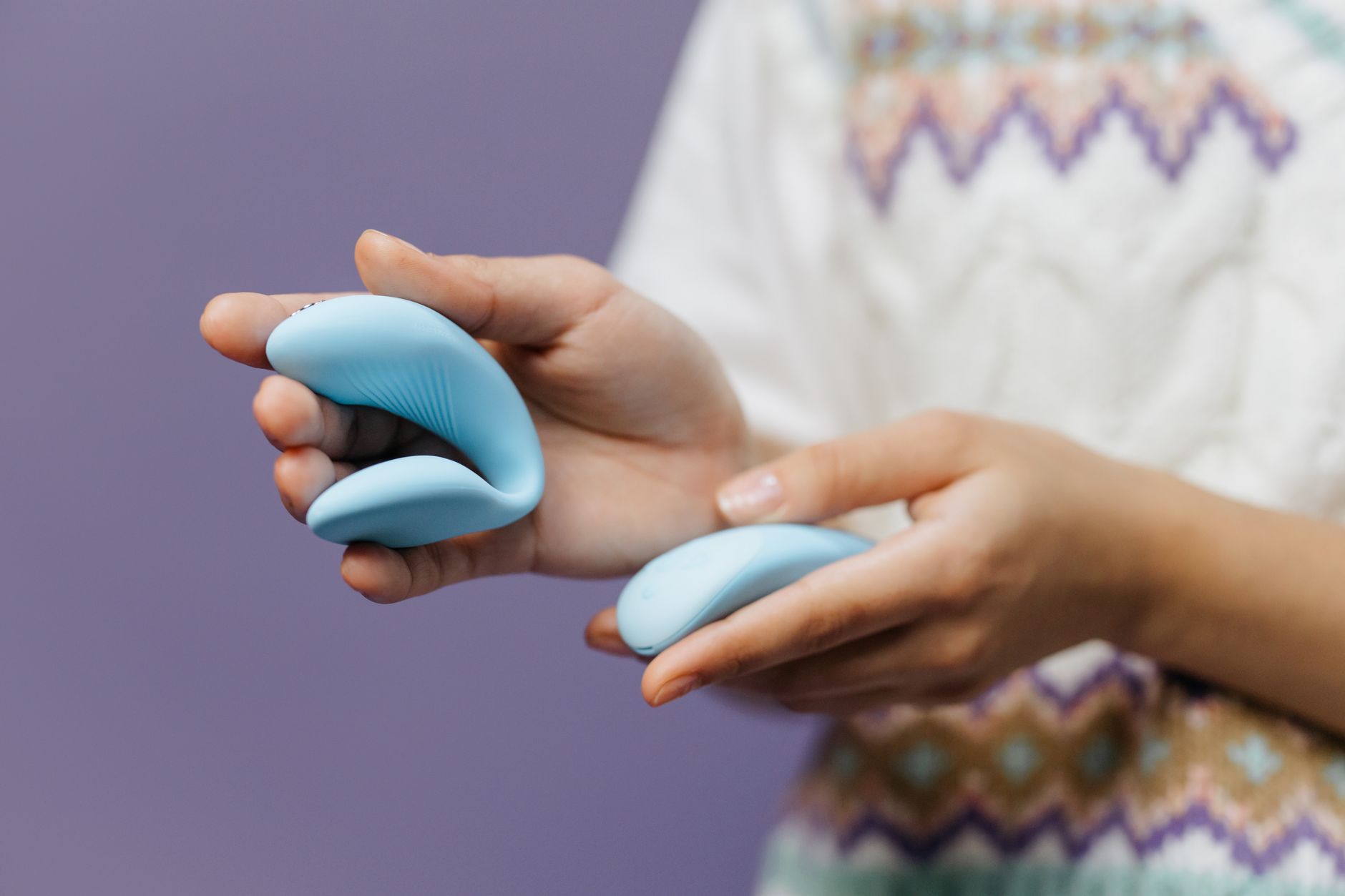
Let's talk about what anxiety actually does to desire
Anxiety doesn't just sit in your head. It travels down your spine, tenses your pelvic floor, and basically tells your whole nervous system that this is not the time for pleasure. Your arousal pathways shut down faster than you can say "relax." And then you get anxious about the lack of arousal, which makes the anxiety worse, which kills arousal further. It's a loop that feels broken.
Here's the thing though. Your body's ability to feel pleasure isn't actually gone. Your nervous system is just stuck in a high-alert state, and getting it out requires something that works different than what you might be used to.
Why lemon vibrators are different when anxiety is the problem
Traditional vibrators rely on you already being somewhat aroused to feel good. They need a baseline of calm. Lemon clitoral vibrators work the opposite way. The suction mechanism activates pleasure pathways even when your nervous system is still partially stuck in fight-or-flight mode.
Here's the neuroscience part without the jargon. When your anxiety is high, your clitoral tissue becomes less sensitive to direct vibration. It's a protective response. But suction stimulates a different set of nerve endings. It's gentler, more diffuse, and it doesn't require the same level of mental calm to register as pleasant.
I've worked with countless clients who say that traditional vibrators feel like a chore when anxiety is present. The sensation doesn't register as pleasure. It just feels like buzzing. Lemon vibrators bypass that friction. You get stimulation that works with your nervous system, not against it.
The nervous system mechanics
Your vagus nerve controls whether you're in rest-and-digest mode or fight-flight mode. When you're anxious, the vagus nerve is basically locked on the wrong setting. Pleasure comes from a specific kind of parasympathetic activation. You can't think your way into it when your body is in threat mode.
What lemon suction does is create a gentle enough stimulus that it doesn't trigger threat. At the same time, it activates enough pleasure receptors that your brain starts getting dopamine signals. Small dopamine = your nervous system starts to relax. Your nervous system relaxes = you get more dopamine. The loop reverses.
Start at the lowest setting. Pattern one on a lemon vibrator is designed to be subtle enough that it won't feel overwhelming when your nervous system is already activated. The pressure is consistent and predictable, which is actually calming.
Three setup shifts that help anxiety specifically
First, change your environment. I know this sounds obvious, but when anxiety is your barrier, your environment matters more than it usually does. If you're worried about being interrupted, get interrupted. If you're worried about noise, go somewhere quiet. Anxiety thrives on ambiguity. Remove every variable you can control.
Second, time it right. Anxiety has a rhythm throughout the day. Most people have a window, usually early morning or late evening, where their nervous system is naturally calmer. Use that window. Don't try to overcome high anxiety. Work with lower anxiety instead.
Third, approach it like meditation, not like sex. This is huge. When anxiety is present, the goal of "having an orgasm" actually makes anxiety worse. You're setting an achievement target your nervous system doesn't believe it can hit. Instead, use the lemon vibrator the way you'd use a meditation app. The goal is ten minutes of parasympathetic activation. Pleasure is a side effect, not the objective.
Building the arousal you thought was gone
Anxiety convinces you that your arousal capacity is broken. It's not. It's just offline. Here's how you rebuild it without forcing it.
Start with five to ten minutes of non-sexual touch. A shower, a massage, anything that tells your nervous system that being touched is safe. Then move to the lemon vibrator at the lowest setting. Spend ten minutes just noticing sensation. Not pursuing it. Not judging it. Just noticing.
Do this three or four times before you even think about trying for an orgasm. You're teaching your nervous system that stimulation equals safety, not danger. This rewiring takes time, but it works.
Once you've done that foundational work, arousal starts building naturally. You'll notice your body responding faster each time. Your breath gets deeper. Your pelvic floor relaxes. These are signs that your nervous system is genuinely shifting out of threat mode.
When you do pursue orgasm after this groundwork, it usually feels different. Less frantic, more integrated. Your whole body is on board instead of your nervous system fighting your desire.
Partner communication when anxiety is in the picture
If you're with a partner, this is actually the easiest conversation to have because it's not about them. "My nervous system is working against me right now. I'm going to use a tool to help reset it. This has nothing to do with you or how I feel about you." Most partners find this clarifying rather than threatening.
The key is not inviting them to help you fix it through willpower or reassurance. Those things usually make anxiety worse because they add social pressure. What helps is: alone time, the right tool, and consistent practice.
If you want to include a partner eventually, that's a different conversation for a different time. But the rebuilding happens solo. Your nervous system needs to learn to access pleasure on its own first.
When to know it's actually working
Progress with anxiety isn't linear. Some days will feel like you're back to zero. But over two to three weeks of consistent practice, you'll notice small wins. You'll get aroused slightly faster. The sensations will feel more clearly like pleasure instead of just sensation. You might have a spontaneous thought about sex that isn't immediately followed by anxiety.
These small shifts matter more than the big ones. They prove your nervous system is genuinely changing.
One more thing. If your anxiety is severe, or if it's linked to trauma, the lemon vibrator is a helpful tool but not a substitute for actual support. A therapist trained in trauma-informed care or somatic work can help you do the deeper rewiring that the vibrator alone can't handle.
But for the everyday anxiety that kills arousal. The background cortisol. The ruminating thoughts. The what-ifs that won't shut up. The lemon suction approach gives you something concrete to do that actually works with your physiology instead of against it.
People also ask
Can anxiety permanently damage my ability to orgasm?
No. Anxiety suppresses arousal, but it doesn't break the actual pathways. When anxiety decreases, arousal capacity returns. You might have to rebuild it, which is what lemon vibrators help with, but the underlying capacity is still there.
Why do lemon suction vibrators feel better than regular vibrators when I'm anxious?
Regular vibrators require a certain baseline of calm and arousal to feel good. Suction works by stimulating different nerve endings in a way that doesn't require that baseline. It feels safer to a nervous system in threat mode. You're not forcing arousal. You're inviting your nervous system to relax through subtle sensation.
How long does it take for anxiety-related arousal problems to improve?
Most people notice shifts within two to three weeks of consistent practice, maybe three to four times per week. Significant improvement usually takes six to eight weeks. But progress isn't linear. Some days you'll feel like you're starting over. That's normal and doesn't mean it's not working.
Is it okay to use a lemon vibrator if I'm on anxiety medication?
Yes. In fact, some anxiety medications like SSRIs make orgasm harder, and lemon clitoral vibrators are specifically designed for that scenario. If you notice that your medication is affecting arousal, a lemon suction vibrator often helps restore it more effectively than other tools.
Should I tell my partner I'm using a vibrator to manage anxiety-related arousal issues?
Depends on your relationship structure. In monogamous relationships, most partners appreciate knowing because it removes mystery and reduces the chance they'll interpret it as rejection. Frame it as a solo tool for your nervous system health, not as a replacement for partnered sex. Most partners get it immediately.
Can I use a lemon vibrator if I also have pain or sensitivity during sex?
Absolutely. In fact, if anxiety and pain are both present, a lemon suction vibrator is even more useful because it bypasses the friction that causes pain while still delivering stimulation. Start slow, use plenty of water-based lubricant, and stop if anything feels uncomfortable.
The reset your nervous system actually needs
Anxiety isn't a character flaw. It's a nervous system that's learned to prioritize safety over pleasure. That's actually smart in some environments. But it doesn't serve you when you want arousal.
Lemon clitoral vibrators work because they're gentle enough to not trigger threat, but specific enough to activate dopamine. They let you rebuild arousal without the willpower battle. You're not fighting your nervous system. You're working with it.
If anxiety has been killing your desire, start with that foundation work. Five to ten minutes, three or four times a week, at the lowest setting. No performance pressure. No orgasm goals. Just nervous system reset.
Your arousal isn't gone. It's just waiting for the right conditions to come back. A lemon vibrator creates those conditions faster than willpower alone ever could.
Ready to explore? Check out how to choose a lemon vibrator if you are sensitive to overstimulation for more guidance on finding your perfect tool. Or reach out to contact if you have questions about what might work best for your situation.