Let's be real about the awkward part
Introducing a lemon vibrator into partnered sex should not feel like a boardroom presentation. But for some reason, many couples treat it exactly like that. Someone brings it up. The other person either feels inadequate or confused. And suddenly what could be amazing becomes tense.
Here's what I've learned from working with couples: the tool itself isn't the problem. The conversation around it is.
Lemon vibrators, especially suction-based tools like the Lem, can transform partnered pleasure. But only if you know how to invite your partner into the experience instead of making them feel replaced by it.
Why partners get nervous about this
There are really only three things going on in your partner's head, and none of them are your fault.
First, they worry they're not "enough." This is almost universal. A vibrator feels like evidence that what they do with their body, hands, or mouth isn't satisfying. It's not rational, but it's real. Addressing it head-on prevents this from becoming a silent resentment.
Second, they don't know what they're supposed to do with their hands. Should they hold it? Watch? Are they supposed to also be touching you somewhere else? The uncertainty paralyzes them.
Third, they're genuinely worried about hurting you or doing it wrong. If they've never seen or held a lemon clitoral vibrator, the mechanics feel foreign. Add anxiety on top of that, and you get performance paralysis.
None of these are reasons to avoid using a vibrator together. They're just friction points you can smooth out with about five minutes of actual conversation.
The conversation that changes everything
Don't lead with the vibrator. Lead with what you want.
Say: "I want to explore something that feels really good for me, and I want you there." Or: "I've been thinking about trying something new with you, and I'd love your input." You're not announcing a problem. You're inviting them into something.
Then show them the lemon vibrator. Not as a tool, but as an object. Let them hold it. Turn it on low. Let them feel how it works. Most people's nervousness evaporates the second they touch one and realize it's just a small, quiet device.
Explain what it does in simple terms: "It's a suction toy. It works by gently pulling, not vibrating. It feels different from what hands can do, and that's the whole point." If you've used it alone before, say that. Normalcy is contagious.
Then get specific about what you want them to do: "I want you to hold it while I guide the pressure." Or: "I want you to use it on me while we kiss." Or: "Can you experiment with the different settings while I tell you which ones feel good?" Clear instruction is not boring. It's relieving.
Positioning that actually works
Most couples default to the receiver lying on their back while the partner kneels or sits between their legs. That's fine for some things, but it creates distance and makes communication harder.
Try this instead: receiver lies back against pillows. Partner sits or lies beside them, facing toward their body. This way you can see each other's faces, kiss, make eye contact. The angle for using a lemon vibrator actually works better from the side anyway because you're not fighting gravity.
Alternatively: receiver sits on top of their partner, facing away or toward them depending on what feels right. This gives the receiver control over depth and angle while the partner can hold the device, touch their back or thighs, or just be present.
The worst positioning is the one where someone feels distant or unseen. Even if the physical sensation is great, the emotional experience tanks. Move around. What works changes.
What your partner actually does with their hands
If your partner is holding the lemon vibrator, their other hand has a job too. This is the difference between mechanical and intimate.
They can touch your thighs, your stomach, your breasts, your back. They can trace your skin while you're using the toy. They can gently hold you steady. They can ask "Does this feel good?" and adjust based on your answer. They're not passive. They're participating.
If you're holding the lemon vibrator yourself and they're beside you, they have options too. They can kiss your neck or mouth. They can gently open your legs if they want to see. They can touch themselves. They can whisper what they're feeling. They can simply be present and attentive.
The key is that nobody is standing there doing nothing. Invisibility breeds resentment. Participation builds connection.
Reading feedback in real time
Your partner can't feel what the vibrator feels like from the outside. They have to trust what you're telling them.
Don't make them guess. Use numbers, words, or signals. "That's a 9." "A bit slower." "Right there." "More pressure." "I need a break." These are not mood killers. They're the opposite. They're evidence that you trust them to help you feel good.
If they ask how it feels, tell them specifically. Not "good" but "It feels like a pulling sensation right at the top" or "It's building really slowly, which I like." The more detailed the feedback, the more they feel like a collaborator instead of an accessory.

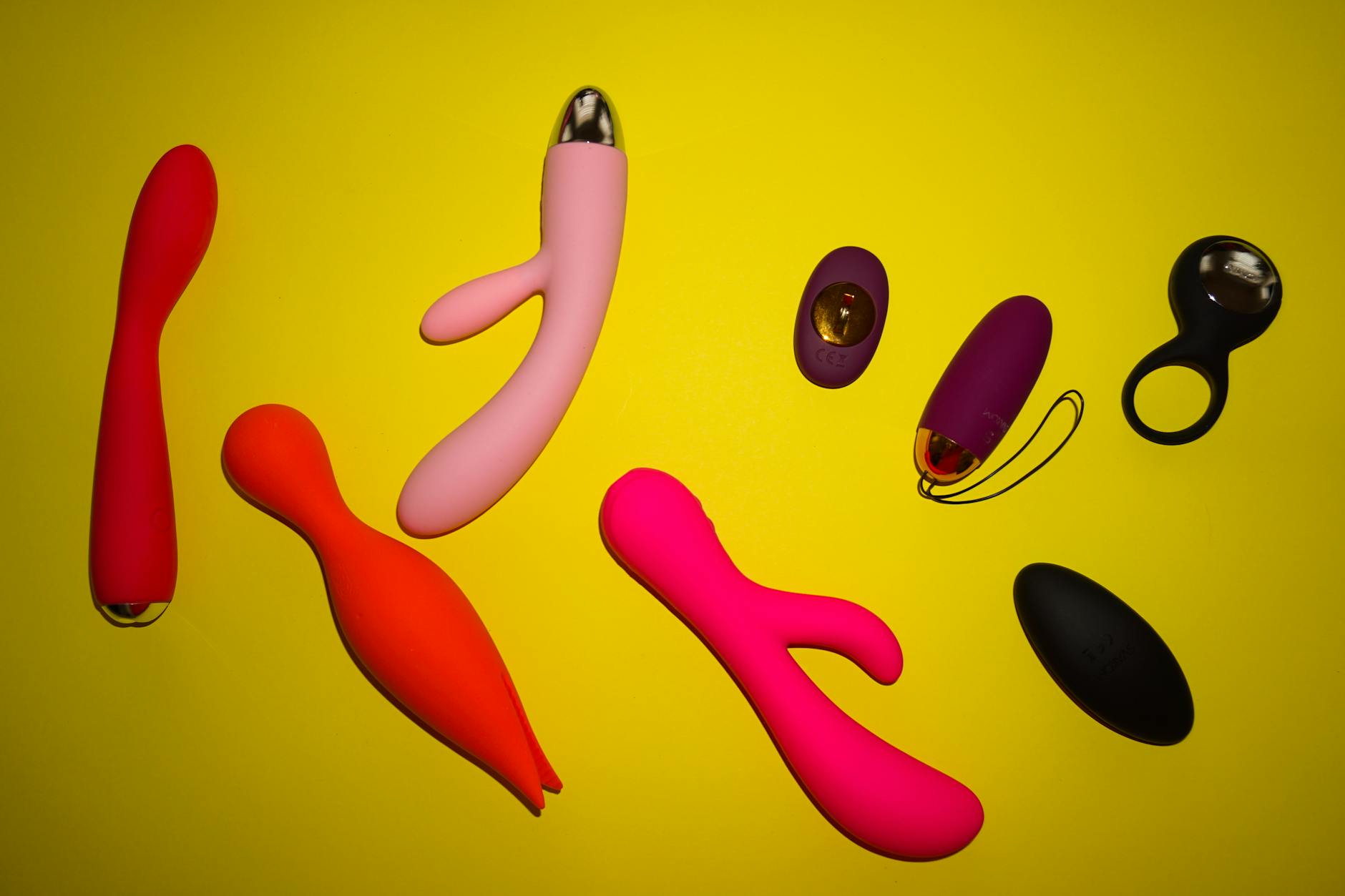
Photo by cottonbro studio on Pexels
Lubrication is a partner activity
Here's something that shifts the energy: apply lubricant together.
Hand your partner a bottle of water-based lube and say "Want to help?" This is intimate, not clinical. They're touching you. They're preparing you. They're part of the setup, not just the execution. Lemon vibrators work better with lubrication anyway. The suction feels smoother, the pressure more nuanced.
Your partner applying lube is also a sneaky form of foreplay. It's slower. It requires them to be present. It gives you both time to settle into the experience instead of jumping straight to the toy.
If they want to use it and don't know how
Let them experiment. Set a boundary first: "I want to try different pressures, so tell me if it starts to feel too intense." Then get out of their way.
Many partners, once they understand that they won't break anything, become genuinely curious. They'll try different settings. They'll change the angle. They'll ask what you like. The lemon vibrator becomes theirs to figure out just as much as it's yours to enjoy.
If they're too tentative, help them. Guide their hand. Show them where the most sensation happens. Tell them what rhythm works. They'll gain confidence fast.
What to do if it still feels weird
Sometimes you set this up perfectly and it still lands awkwardly. That's not failure. That's information.
Ask directly: "What was that like for you?" Their answer might be "I felt left out" or "I didn't know what I was doing" or "It was weird seeing you like that." None of these mean you can't use a lemon vibrator together. They just mean you need a different approach.
Maybe next time they hold it the whole time and you guide the pressure. Maybe you use it alone first while they watch. Maybe you try a different position. Maybe you incorporate it for five minutes instead of the whole experience. Small adjustments, more communication, more attempts.
Sex with a partner is collaborative. Using a lemon clitoral vibrator together is just another conversation in that collaboration.
When it actually clicks
The moment your partner stops thinking about the tool and starts thinking about you is the moment everything changes. You'll feel it. They'll feel it. The vibrator becomes background.
What remains is partnership. Attention. The knowledge that you're both working toward the same thing: your pleasure, and the pleasure of being close while that happens.
That's when the lemon vibrator stops being a novelty or a source of tension. It becomes a normal, useful part of your shared experience. Like how to use lemon vibrators when you have a new partner, but with history and trust already in place.
Your partner doesn't have to be a expert. They just have to be willing to pay attention, ask questions, and stay curious. That's actually all you've ever needed.
FAQ
What if my partner is uncomfortable with the idea?
Don't push. Instead, ask why. Is it a performance anxiety thing? Do they think it means you're not satisfied? Are they worried about technique? Different concerns need different conversations. You might also try understanding lemon vibrators when your partner has hesitations about introducing new tools gradually rather than all at once. Start with conversation, not with the toy on the bed.
Do I have to use a lemon vibrator during sex with my partner?
No. You can use it before or after, solo while they're present but not actively involved, or integrated into foreplay. Some couples use it for part of the experience and not others. There's no rule. What matters is that it works for both of you.
What if my partner wants to use the vibrator but I'm not sure I like it?
Tell them. You're experimenting together. If you don't like it, you don't like it. That's valuable feedback. Maybe it's the angle, maybe you need more warm-up, maybe lemon vibrators just aren't your thing and that's completely fine. How to choose a lemon vibrator if you are sensitive to overstimulation might help you figure out if it's the tool or the approach.
Is using a vibrator together a sign our sex life needs help?
No. It's often a sign that you're both curious and willing to explore. Some of the healthiest couples I work with are actively trying new things. Sometimes what looks like a problem is actually adventure.
How do I bring this up without making them feel inadequate?
Lead with curiosity and pleasure, not deficit. "I want to try something that feels amazing for me, and I want you involved" is completely different from "Our sex life needs this." One is invitation. The other is criticism. Use the first one.
What if we try it and it doesn't work?
Then you've both learned something. You might try a different position, different setting on the lemon vibrator, different timing, or you might decide it's not for you. That's all fine. Sex with a partner is practice, not performance.
What comes next
The easiest way to move forward is with an actual conversation. Pick a quiet moment, not during sex. Say what you want to explore. Show them the tool if you have one. Ask what they're thinking. Listen to the answer without defending yourself.
Most partners aren't resistant to vibrators. They're resistant to feeling replaced or incompetent. Address that, and the rest is curiosity.
If you're both interested in going deeper with communication around pleasure, how to use lemon vibrators when your partner wants to help covers more collaborative approaches. The more you talk, the easier this gets.
Your partner doesn't have to be perfect at this. They just have to be willing. That's usually enough.